







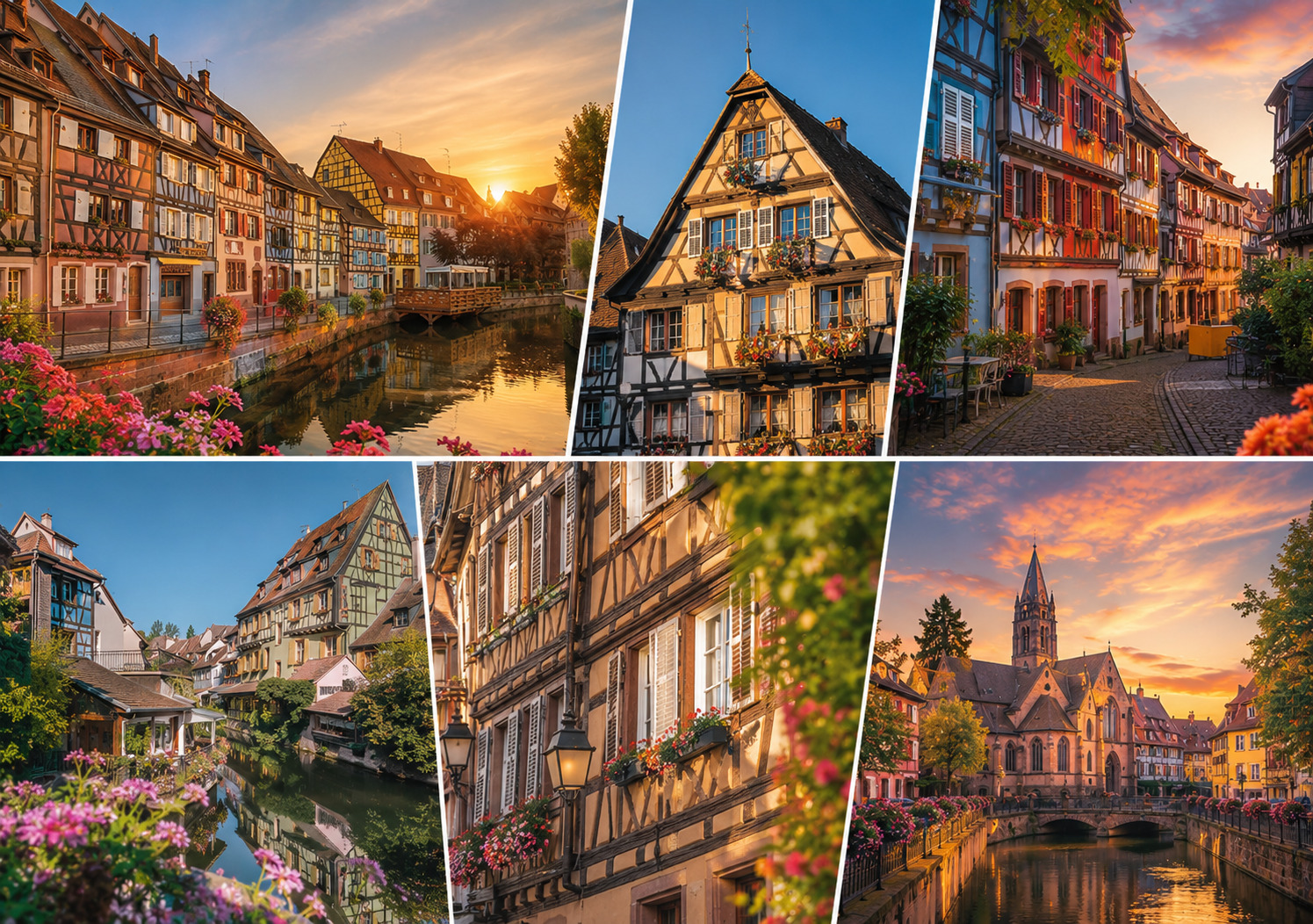

Colmar feels like a town imagined by artists tired of noisy capitals. Everything here seems almost unreal: colourful houses, canals filled with reflections, wooden shutters, old wine signs, flowers on balconies and narrow streets where you want to wander without a map or destination.
The most famous part of Colmar is “Little Venice,” where boats glide slowly along the canals and the water mirrors the old facades. In the evening, lanterns begin to glow and the whole town feels almost theatrical. At moments like these, it becomes difficult to believe that this is a real place and not the set of an old French film.
One of Colmar’s great landmarks is the Pfister House, a sixteenth-century mansion with wooden galleries and painted walls. The Unterlinden Museum holds the famous Isenheim Altarpiece by Matthias Grünewald, a masterpiece that draws art lovers from around the world.
But the true charm of Colmar is not only in its museums. It lives in the atmosphere itself. You want to step into small bakeries, listen to the sound of dishes in old cafés, look at the windows of wine shops and taste Alsatian wines somewhere on a quiet square. The town feels made for slow living and long conversations.
What is most remarkable is how Colmar changes with the seasons. In spring it disappears beneath flowers, in summer it becomes brighter and livelier, in autumn it smells of vineyards and young wine, and in winter it transforms into one of the most beautiful Christmas fairytales in Europe.
Some cities impress you with architecture. Others stay in memory because of their history. Colmar remains with you because of a feeling: peace, warmth and a quiet kind of happiness.

